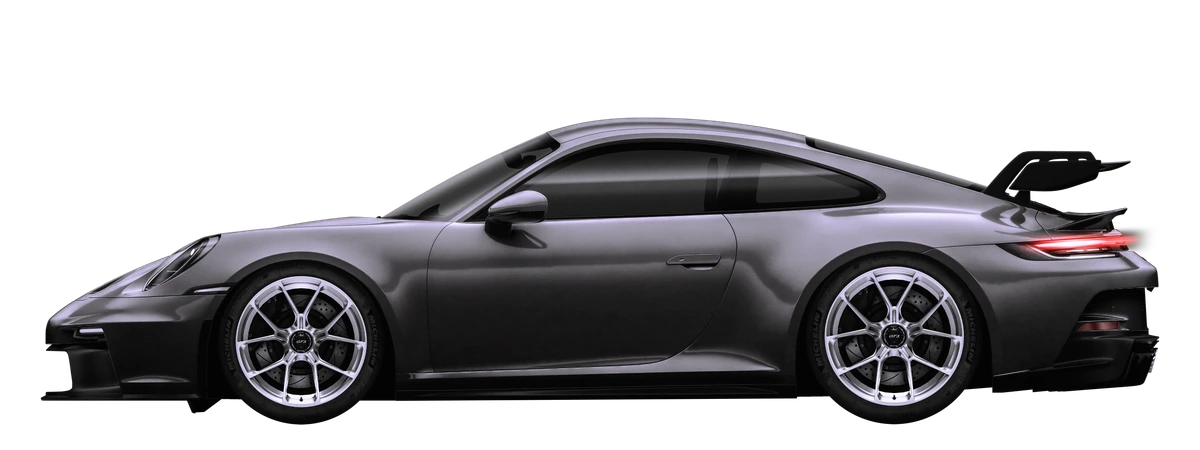
A naturally aspirated flat six, a rear-engined layout and a clear focus on the circuit. The Porsche 911 GT3 (992) is a fleet option for drivers who want to work on the fundamentals and enjoy the process of getting more consistent.
The car
The 992 GT3 pairs a 4.0-litre engine with 510 PS. Its front suspension uses a double-wishbone layout, a feature drawn from Porsche's racing programme. It is a road car with a strong track focus, distinct from the purpose-built GT3 Cup racing car.
| At a glance | Porsche 911 GT3 (992) |
|---|---|
| Engine | 4.0-litre naturally aspirated flat six |
| Power | 510 PS |
| Layout | Rear engine, rear-wheel drive |
| Stratos booking | Fleet option, subject to event availability |
Technical background: Porsche's 992 GT3 overview.
What you work on
Braking references, a repeatable line and a clean exit matter more than chasing a lap time. With your coach, you can work through those details one session at a time, then use the debrief to decide what to focus on next.
Tell us about your previous driving before choosing your car, so we can find the right starting point.
GT3, GT3 RS or Cup?
The 991 GT3 RS and 992 GT3 RS offer different generations of the RS approach. The 992 GT3 Cup is a racing car and is arranged on request, with preparation and coaching agreed individually. It is not simply another trim level of the road-going GT3.
Choose your event
The GT3 is offered through the car selection on confirmed event pages. Choose your dates, review the event's current options and select the car there. Availability and the full booking details are shown for that event.
FAQ
Is this the GT3 RS?
No. This is the Porsche 911 GT3 from the 992 generation. The 991 and 992 GT3 RS models have their own entries in the Stratos fleet.
Is this a standalone car rental?
No. The car is offered as part of a Stratos circuit experience. The event page explains the driving and hospitality arrangements.
Can I choose this car when I book?
Yes, where it is available on your selected event page. Check that page for current allocations rather than assuming availability from this overview.